
Waterpulse
An arcade water polo game for the browser, made as an entry for the 2026 Premis Ludi.
Overview.
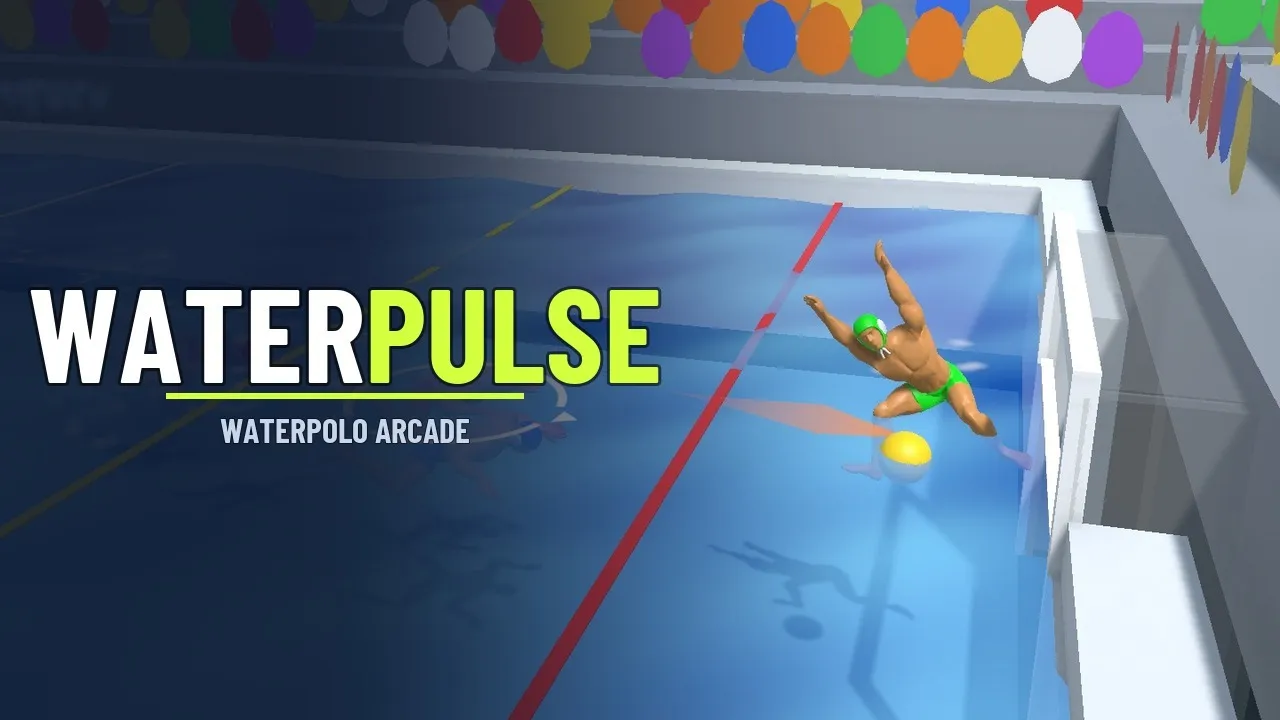
Waterpulse is an arcade water polo game for the browser, made as an entry for the 2026 Premis Ludi, the video game awards organised by 3Cat. Two teams of three players and a goalkeeper face off in 2:30 matches. The goal: someone who doesn't know water polo can play within a minute and wants another match.
The brief.
This edition's challenge asked for a game aimed at players aged 25 to 35 that could help popularise a sport that is widely played in Catalonia but gets little visibility. Waterpulse answers it with water polo, built on three pillars.
Easy to learn
Swim, pass or steal, shoot and use an ability. One button changes its function depending on who has the ball.
Progress and replayability
Short matches, a different score every match, a record per user and a ranking. Mastering the shot bar and the multiplier shows in the points.
A broadcast look
A sports-broadcast interface, real pool and crowd sound, and all text in Catalan.
My role.
As Game Designer & Producer, I planned development in phases, made the design calls along the way, tested every build and decided what went into the game and what was left out.
- What I did
- Planning: development split into phases, each with a clear “done when” goal, and every phase tested before moving on to the next
- Design calls during development: control that follows the ball, winning on goal points, a golden goal on a tie, how play restarts after a goal
- Features added mid-project: a camera that follows the play, stamina and dash, the menus, pause, users, the ranking and the end-of-match summary
- Playtesting: playing every build, finding bugs and checking the fixes
- Scope: cutting the local 1v1 mode from the entry
How a match plays.
The team with the most goal points when time runs out wins; a tie on points goes to a golden goal. The clock only runs during play and stops for goals and restarts.
- Scoring
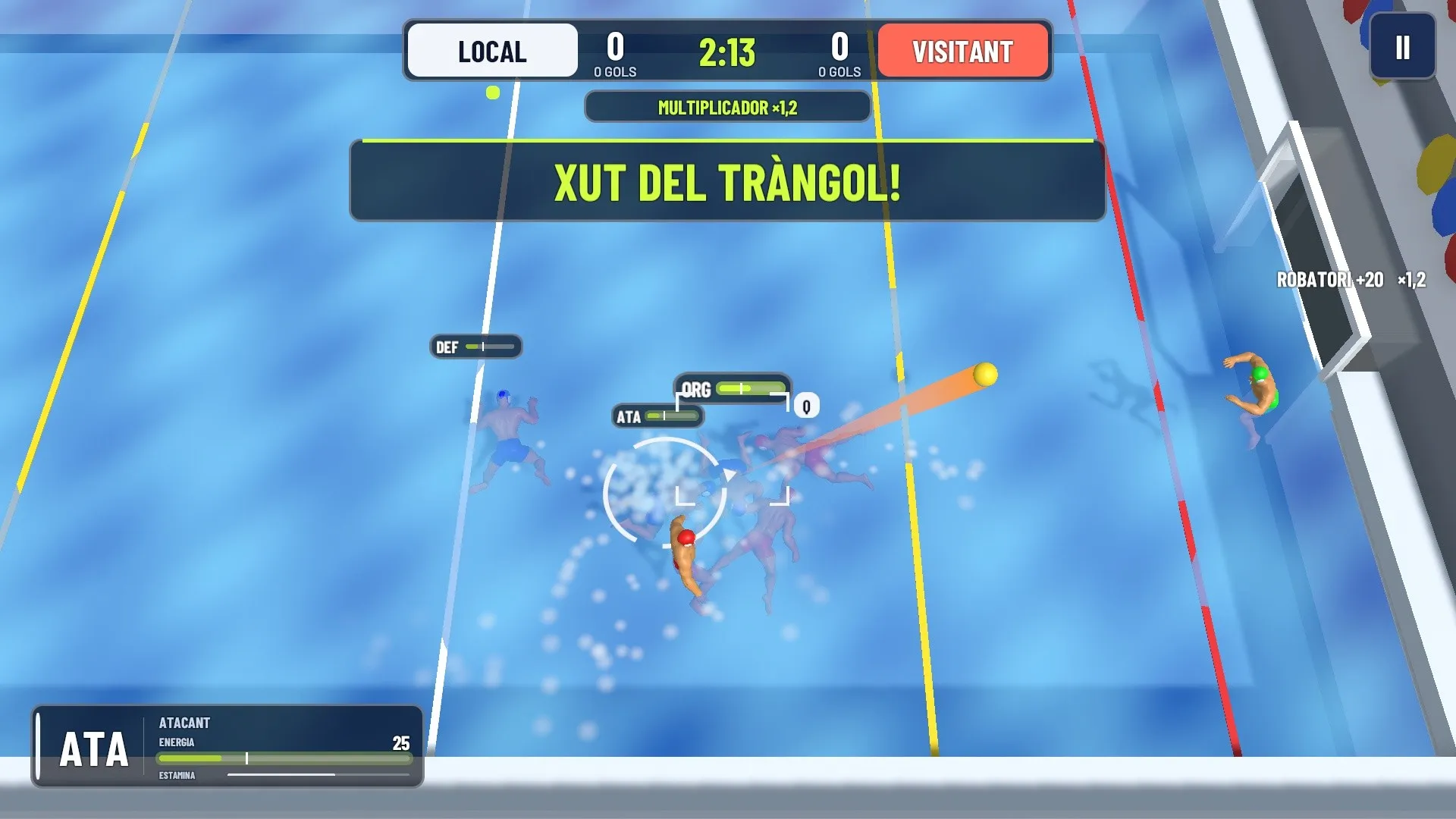
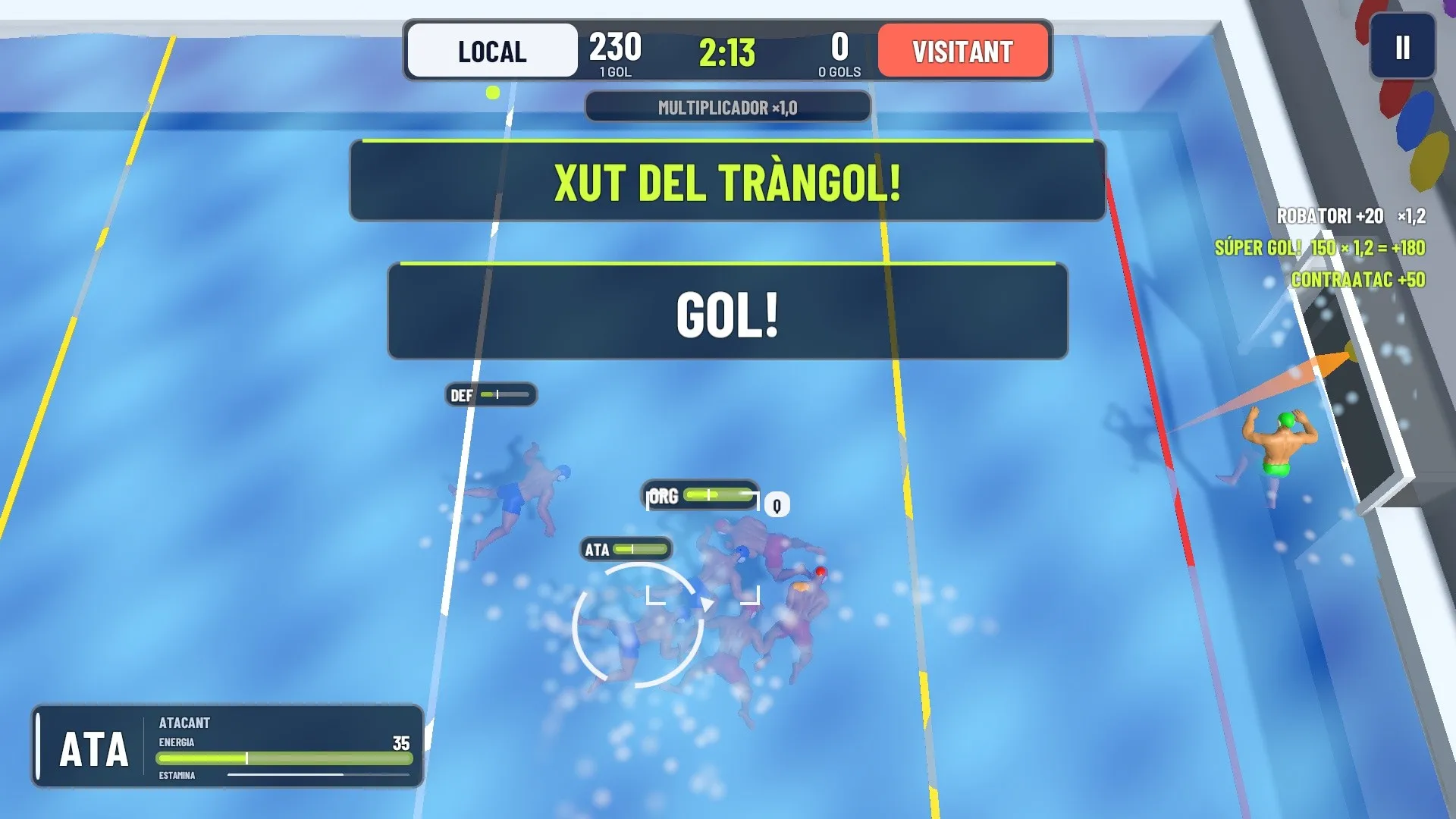
- Goal: 100 points, or 150 with the Xut del Tràngol, times the possession multiplier.
- Possession multiplier: starts at ×1 and tops out at ×3. Completed passes, steals and passing streaks build it up; losing the ball loses it, and scoring spends it.
- Counter-attack: scoring within 5 seconds of winning the ball back or making a save adds 50 points.
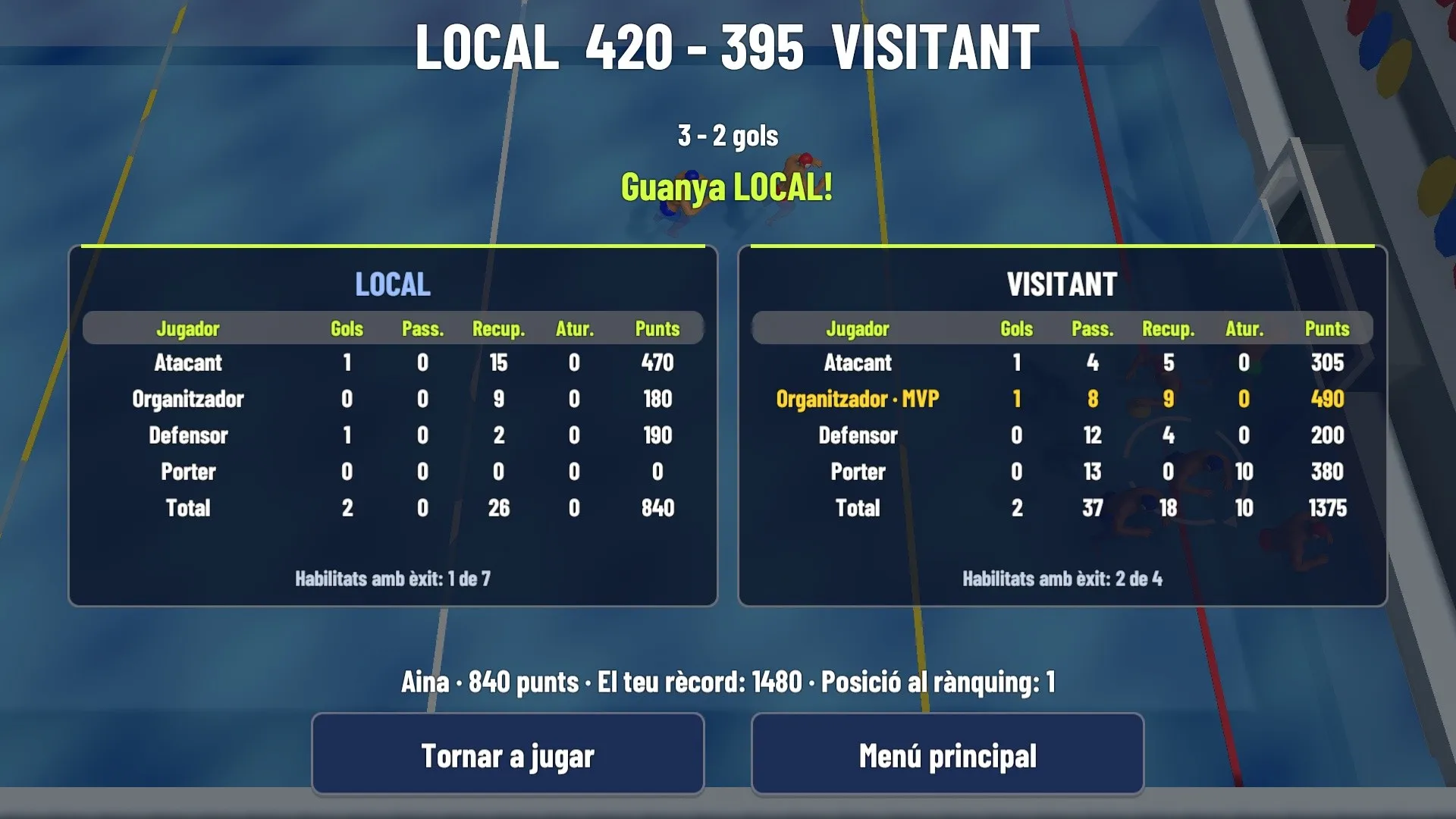
- Other points: pass +10, interception or steal +20, save +25. They don't decide the match, but they count towards the MVP, the record and the ranking.
Abilities.
Abilities cost energy, which starts at 50 out of 100 and rises with passes, steals and goals. Goalkeepers have their own energy, which starts at 0 and fills by itself in about a minute.
Field player with the ball · 35 energy
Xut del Tràngol
An instant shot 1.6 times faster than normal. The goalkeeper only stops it if it hits them.
Field player without the ball · 25 energy
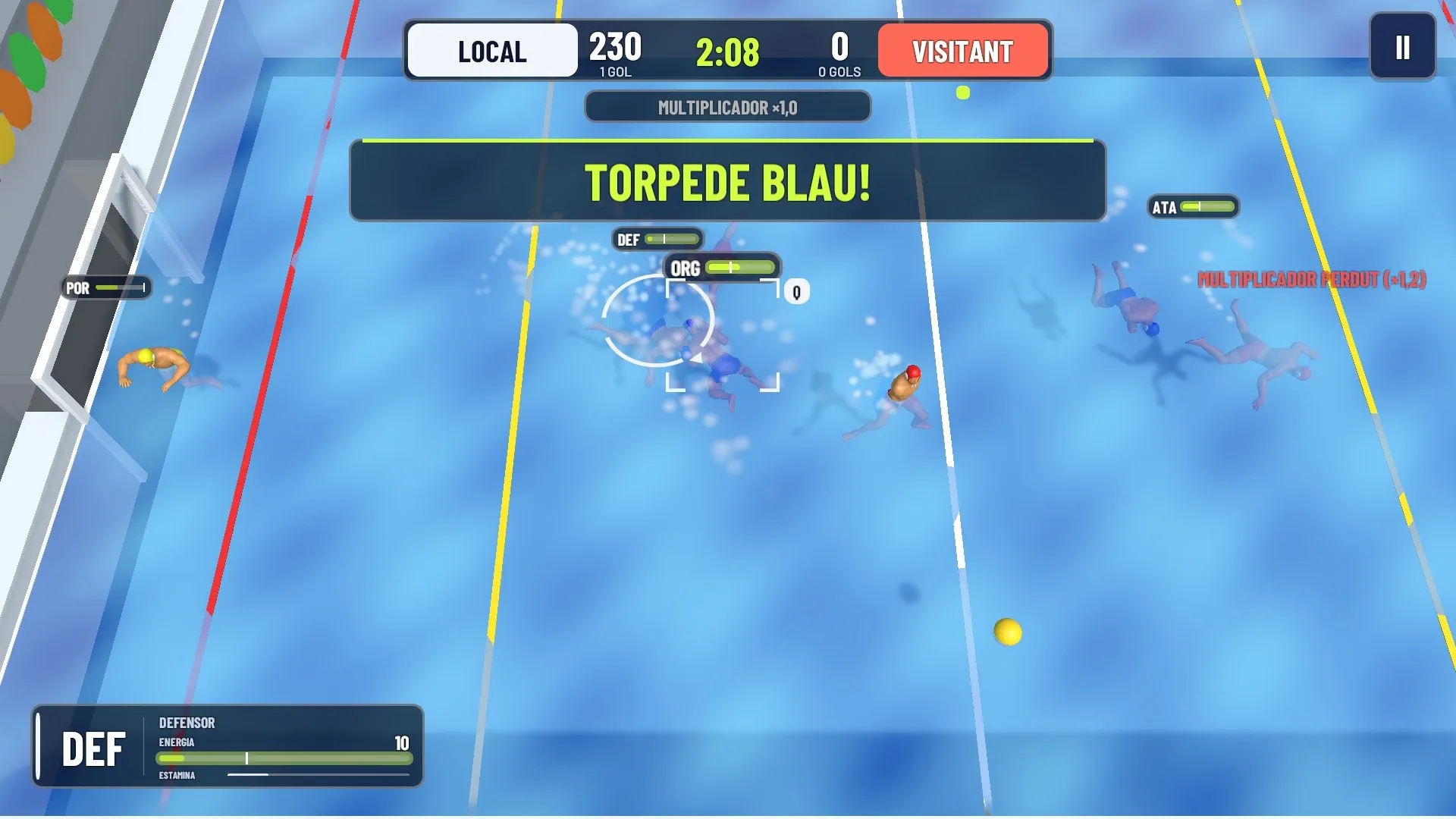
Torpede Blau
Double speed for one second, in a fixed direction.
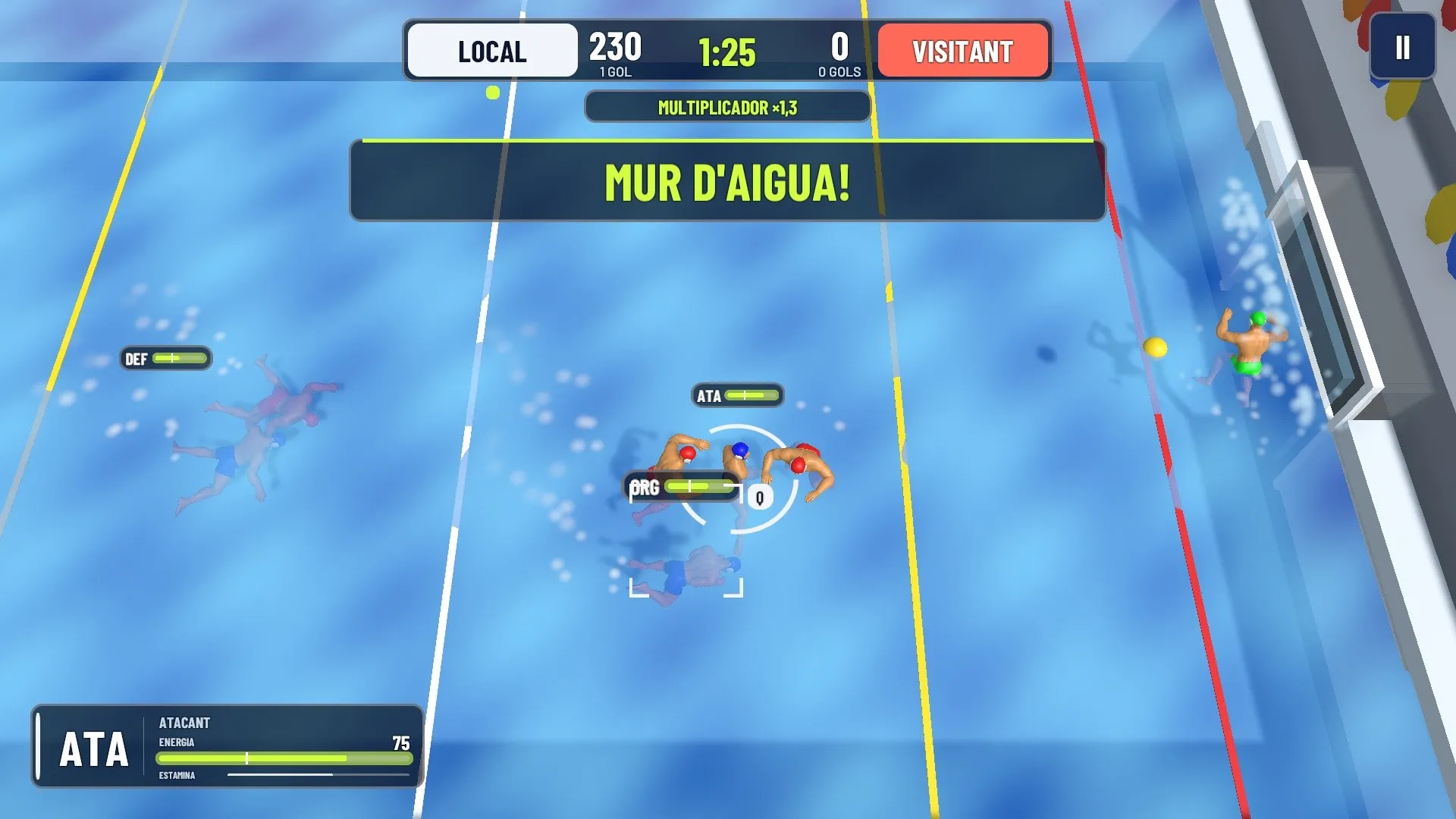
Goalkeeper · 100 energy
Mur d'Aigua
A two-second curtain of water that stops every shot that reaches it.
Key design decisions.
Control follows the ball
You control whichever teammate has the ball; on defence, control passes to the player nearest the ball. You can also switch players by hand or take the goalkeeper.
Goal points decide the match
The winner is the team with the most goal points, not the most goals. Every goal is multiplied by the possession multiplier, so how a goal is built changes the result.
A shot you have to time
The first press charges the shot in slow motion and the second releases it. In the green zone of the bar the shot is perfect; outside it, weaker and off target.
Steals from the front
You can only steal the ball from in front of the rival, and passes can be intercepted when they go near a player.
Offline, in a single file
The game opens from a single HTML file, with no server, installation or connection. Users, records and the ranking are saved in the browser, with no passwords, and you can also play as a guest.
Desktop, phone and tablet.
- Keyboard, gamepad and touch.
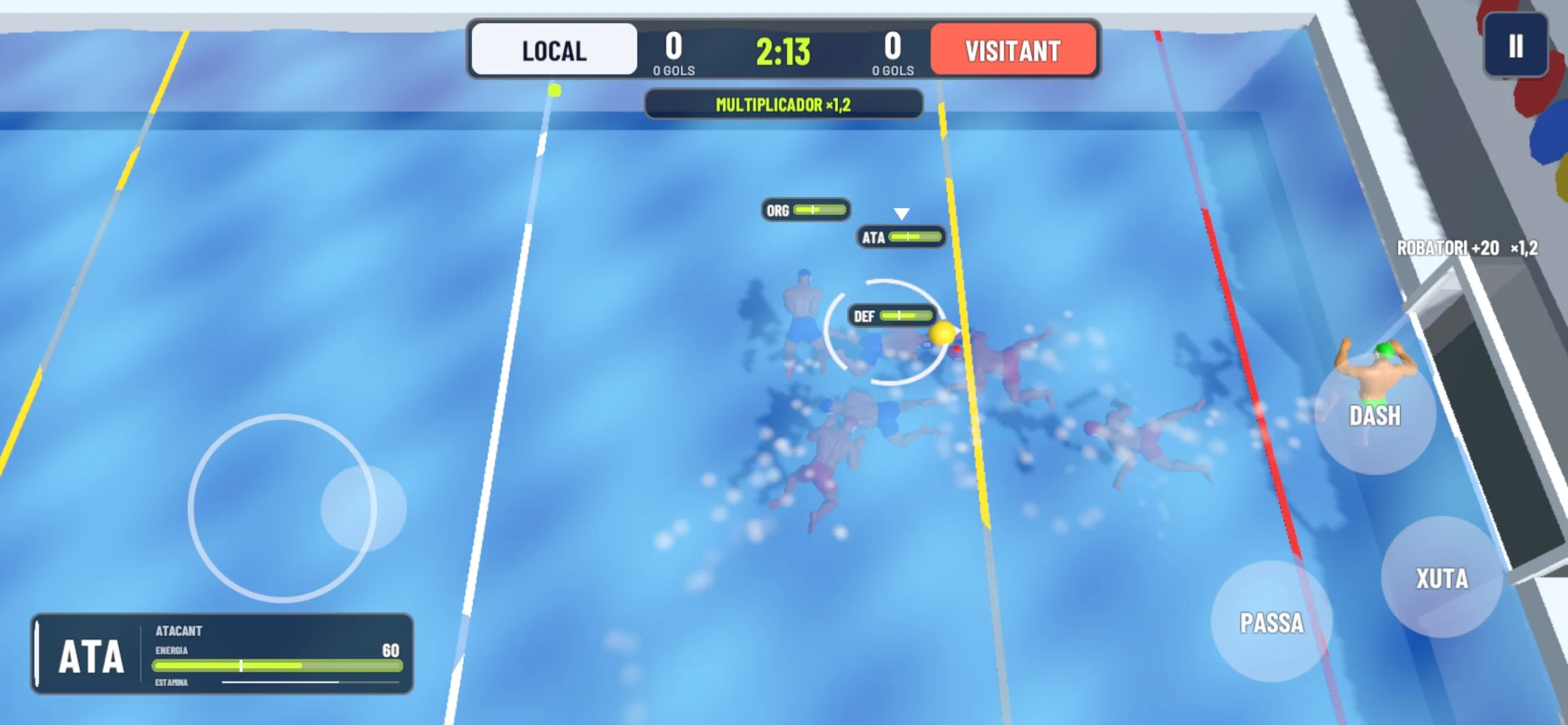
- On touch screens: a joystick that appears where the thumb lands and three large buttons that change their function with the play.
- Touch is detected by the browser's main pointer, so iPads get touch controls and touchscreen laptops don't.
- Played in landscape; in portrait the game asks you to rotate the device. The interface scales with the screen, and the summary tables shrink to fit 4:3 screens.
Playtesting.
Every phase was played and checked before the next one started. Full matches were also played by a bot that uses the same controls as a player, in 16:9, 19.5:9 and 4:3. They surfaced real bugs, such as own goals by the rival AI and overlapping text on the results screen, and both were fixed.
- Checks before the submission
- No internet requests: zero external requests while loading, in the menus and during a match.
- A full playthrough on desktop in Microsoft Edge, from the intro to the match, with no rendering errors.
- Touch play on an emulated iPhone and iPad, with the joystick and buttons.
- Users and records still there after reloading the page.
Production.
A phased plan
Development was planned in phases (the pool and swimming, the ball, teams and goalkeepers, rival AI, match flow, abilities, scoring, HUD and touch controls, polish and balance), each with a clear goal and a test before moving on.
Scope cut
A local 1v1 mode needed one or two more days, and an online one would have taken weeks and broken the offline requirement. I cut it from the entry, and it stays on the list of next steps.
Next steps.
- Known limitations
- The ball moves on the plane of the water, so passes and shots don't have a visual arc yet.
- Balance values were tuned during development but still need tests with outside players, especially ability energy and passing under close pressure.
- The file is 95 MB, so loading can be slow on modest phones.
- What comes next
- A fictional club competition, with original names and crests and pools that recall Catalan venues.
- Short commentary in Catalan for goals, saves, the golden goal and full time.
- The basic rules of real water polo, inside the game.
- A 1v1 mode, local first and then online.
- More abilities and more distinct roles for the attacker, playmaker and defender.
- Goals, medals and unlockable looks, with no power upgrades.
Screenshots.
Technical notes.
Made in Unity 6 with C# and URP. The web build is packed into a single HTML file that runs offline in any browser with WebGL 2, on desktop, phone and tablet. The game is in Catalan, because it was made for the Premis Ludi.
Controls: WASD to swim, J to pass or steal, K to charge and release a shot, L for abilities, Shift to dash, Q to switch player, E to take the goalkeeper, Esc to pause. Gamepad and touch are also supported.